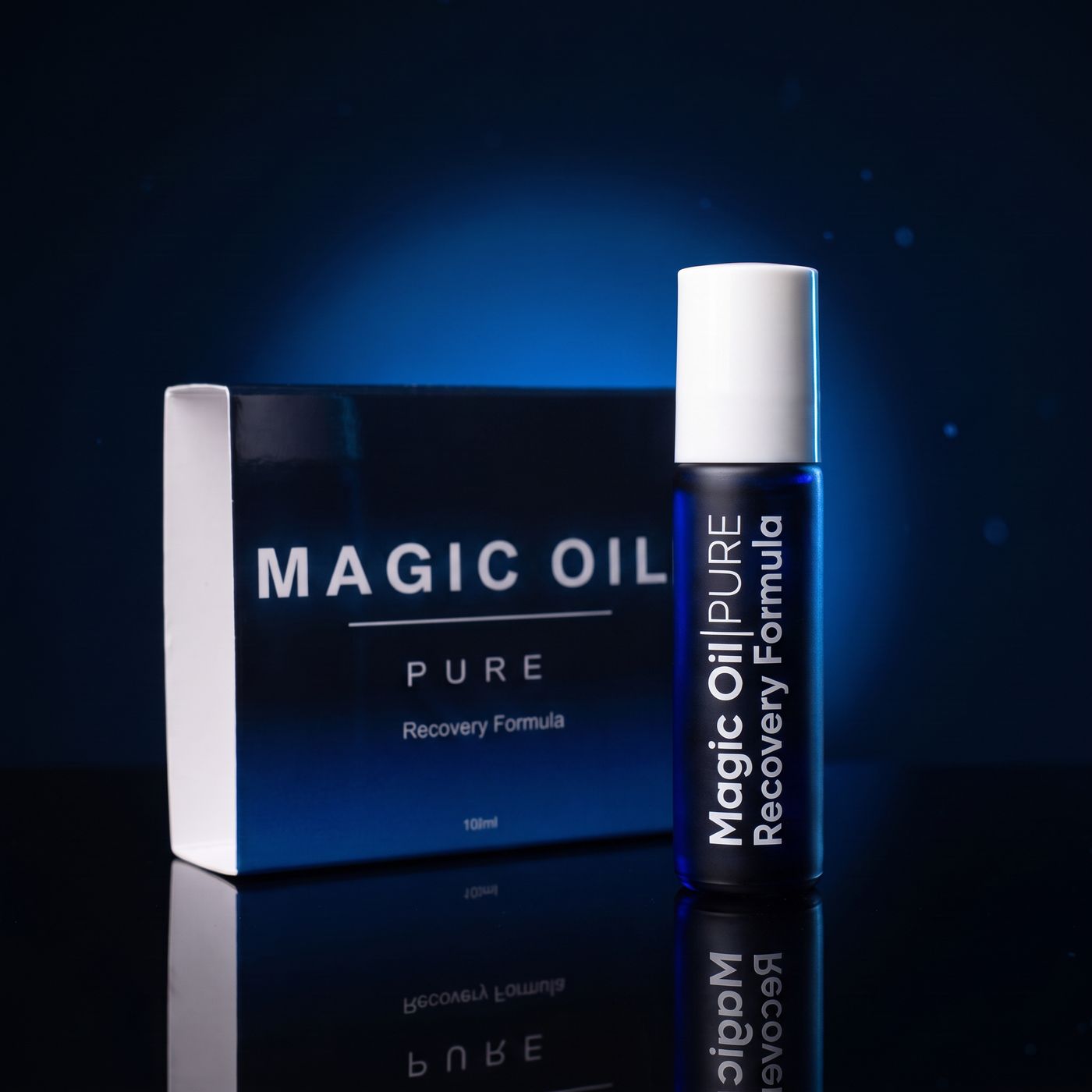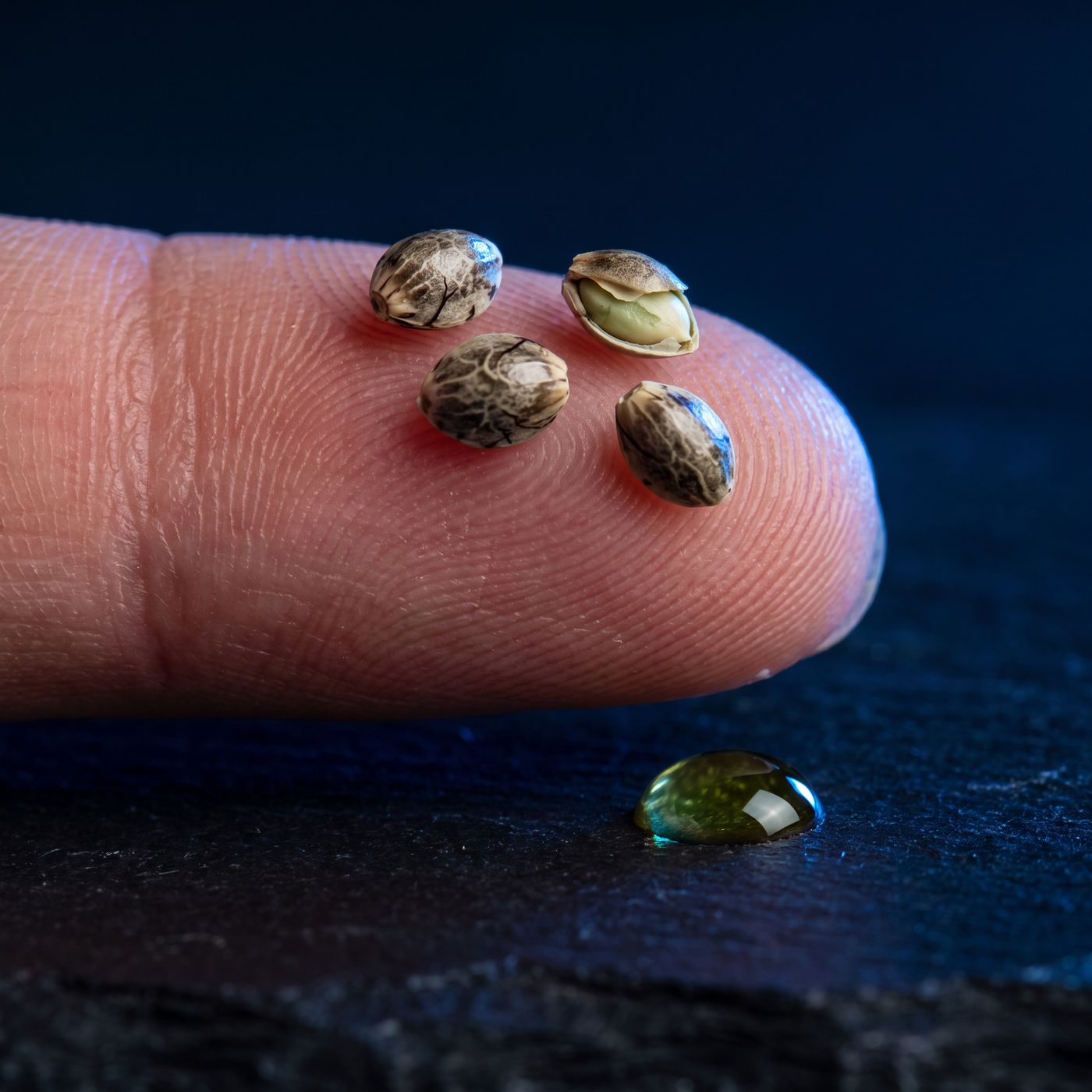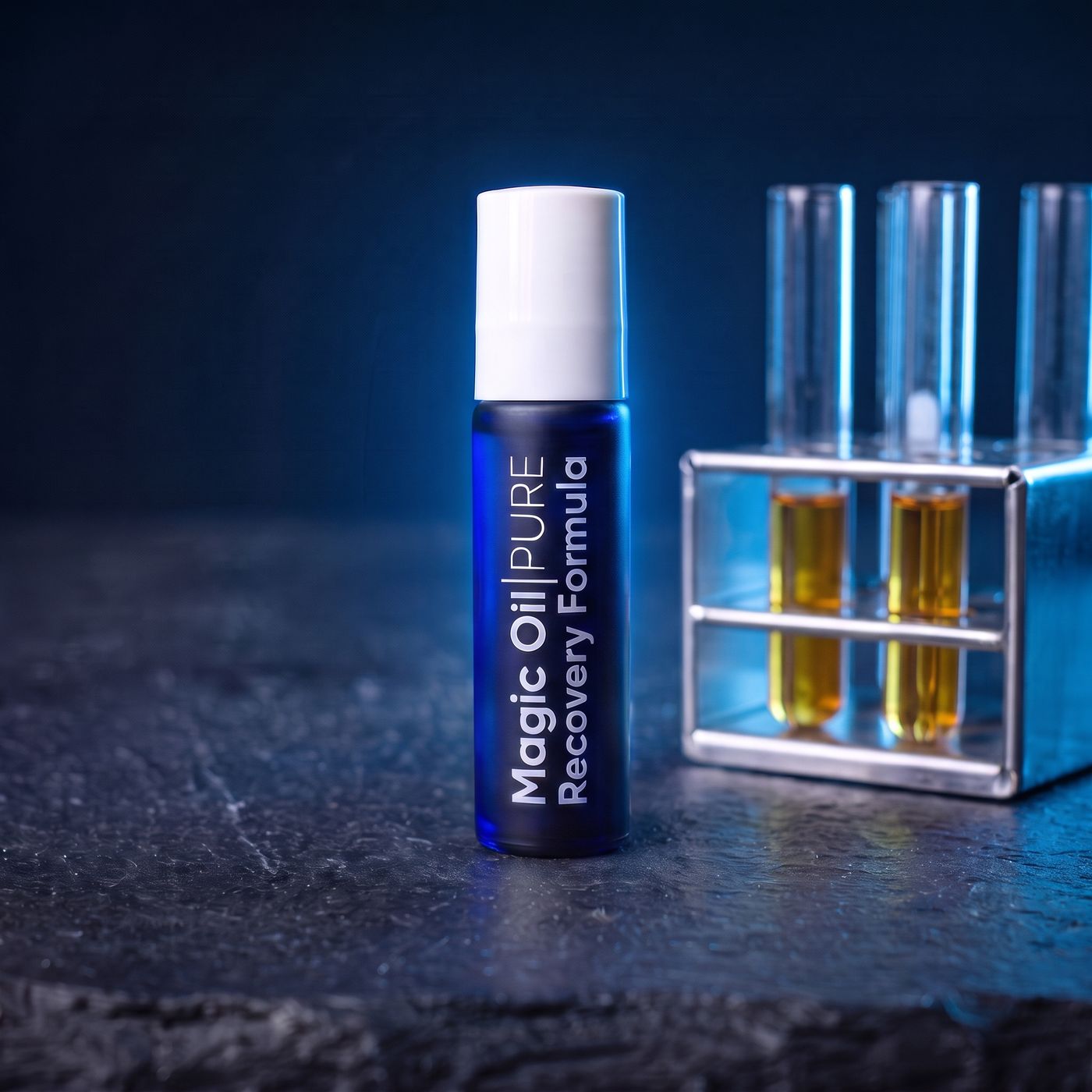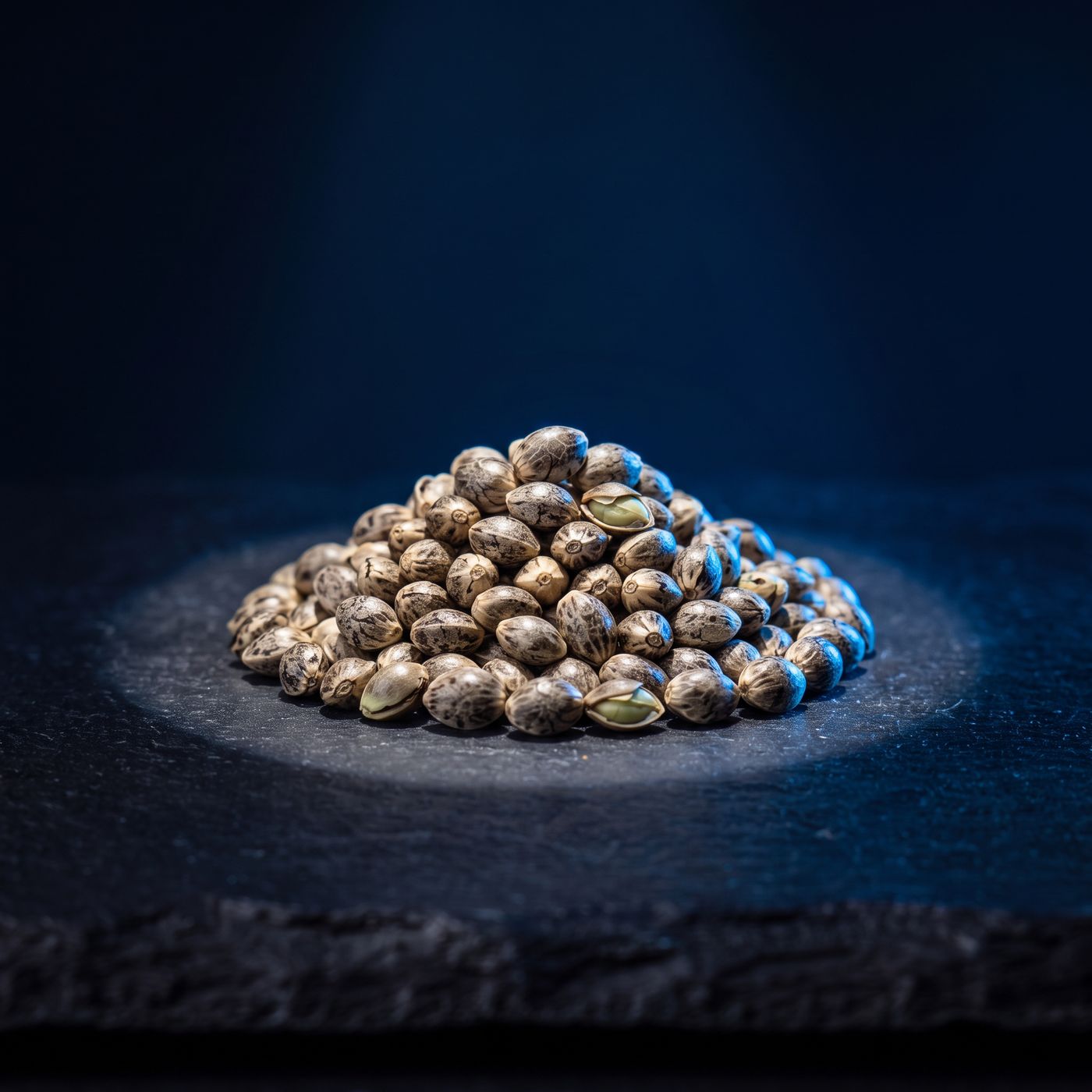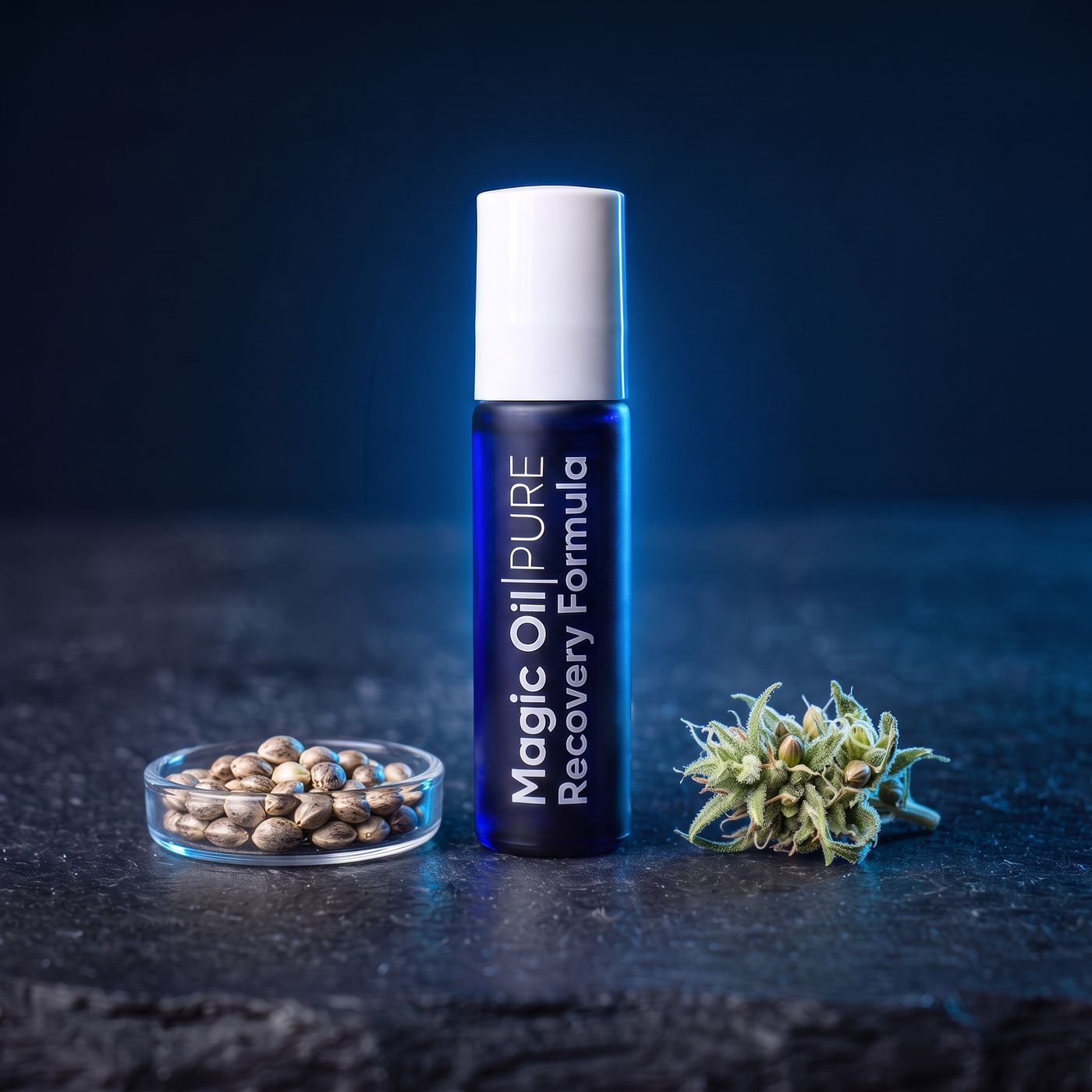
The ingredient list on Magic Oil PURE is two lines long: cold-pressed hemp seed oil and a multi-strain hemp extract. A short list is easy to read. What it doesn't tell you is how much is going on inside each ingredient. Hemp is one of the most chemically varied crops people grow. Between them, the seed and the flower produce hundreds of natural compounds.
This guide walks through the main families in plain English.
Ingredient one: cold-pressed hemp seed oil
Like every plant oil, hemp seed oil is made mostly of fatty acids: long chains of carbon atoms that plants use to store energy in their seeds. What makes one oil different from another is the mix of fatty acids it carries. Hemp seed oil has an unusual mix.
Omega-6 and omega-3
The two biggest components are polyunsaturated fatty acids. Linoleic acid is an omega-6. Alpha-linolenic acid is an omega-3. Oklahoma State University's extension service puts linoleic acid at 50 to 70% of hemp seed oil. It describes the oil's omega-6 to omega-3 ratio as about 3 to 1.
The omega number is simply chemistry. It tells you where the first double bond sits along the carbon chain, counted from the far end of the molecule, known as the omega end. In an omega-3 it sits at the third carbon. In an omega-6 it sits at the sixth.
GLA and SDA: the rare pair
GLA (gamma-linolenic acid) is an omega-6. SDA (stearidonic acid) is an omega-3. Both are uncommon in plant oils. GLA turns up in a small group of seed oils such as evening primrose, borage and blackcurrant seed. SDA is rarer still. Most of the oils in a kitchen cupboard, such as olive, sunflower and rapeseed, contain little or none of either.
Hemp seed oil contains both. The Oklahoma State figures put GLA at 0.5 to 6% of the oil and SDA at 0.3 to 2.5%. Those are small numbers. They are also the reason hemp seed oil stands apart from most other plant oils.
Figures from Oklahoma State University Extension. Natural oils vary from crop to crop, so these are ranges rather than a specification for any one batch.
Vitamin E: a family of eight
Vitamin E isn't one molecule. It is a family of eight related compounds: four tocopherols and four tocotrienols, each named alpha, beta, gamma or delta. Hemp seed oil is naturally rich in tocopherols, at levels similar to soybean and sunflower oil.
Inside a bottle, tocopherols play a practical role. They are natural antioxidants within the oil itself, which means they slow down oxidation: the gradual reaction with air that makes oils go stale. It is one reason a well-made, minimally processed oil does not need a long list of additives.
Ingredient two: the multi-strain hemp extract
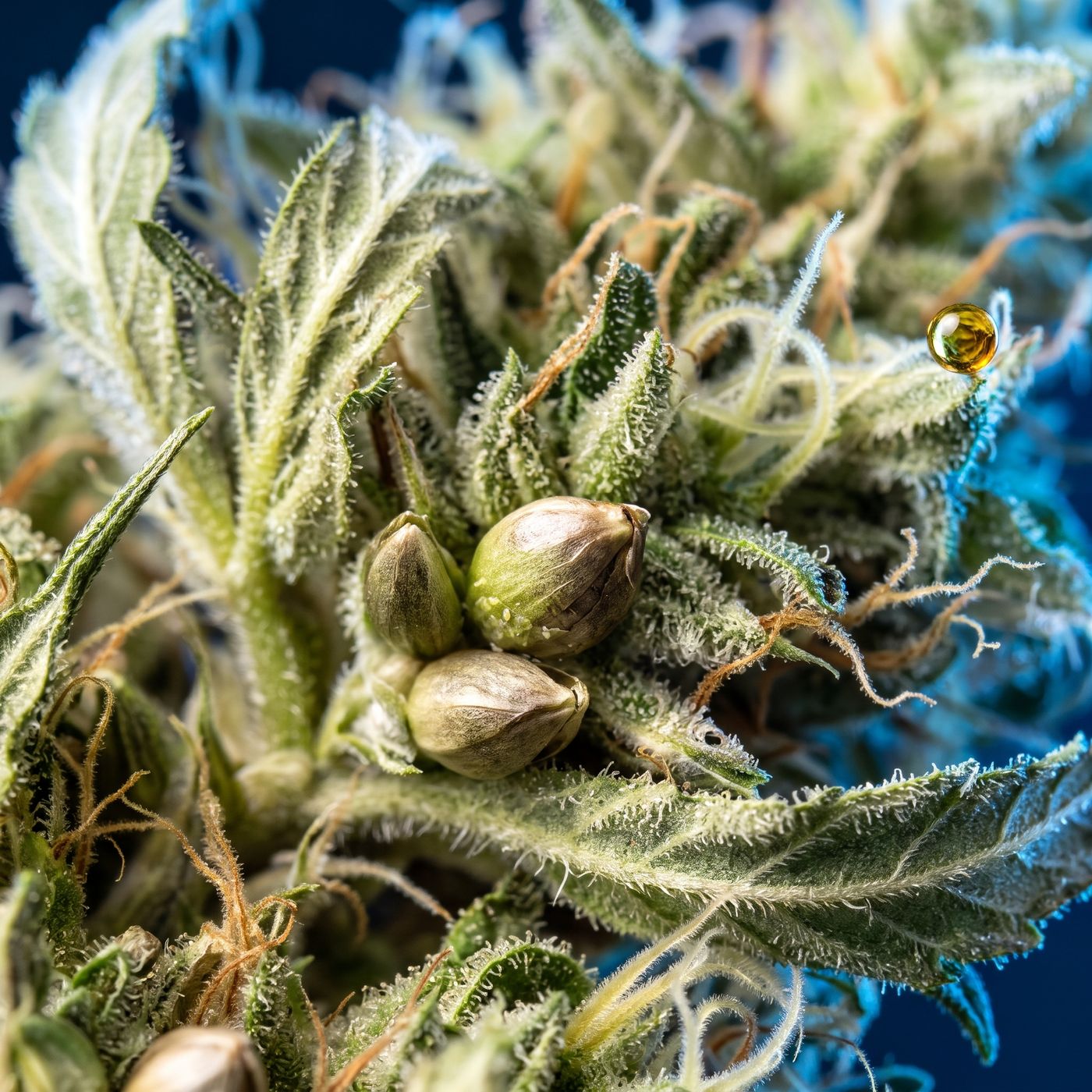
The flower of the hemp plant produces compounds the seed does not. Two families matter most here.
Terpenes
Terpenes are the aromatic compounds behind the smell of pine needles, citrus peel and cracked black pepper. Hemp produces a wide range of them. Compounds commonly found in hemp include beta-caryophyllene (also found in black pepper and cloves), myrcene (hops and bay), limonene (citrus peel) and alpha-pinene (pine). Each variety has its own balance, which is why we use an extract drawn from more than one.
Flavonoids
Flavonoids are a large family of plant pigments found in fruit, vegetables, tea and herbs. Hemp makes familiar ones such as apigenin, luteolin and quercetin. It also makes a small group called cannflavins, first identified in cannabis.
And cannabinoids?
Hemp is best known for cannabinoids such as CBD and THC. Our finished oil was tested by a UKAS-accredited laboratory: cannabinoids, including THC and CBD, were not detected. Magic Oil PURE is not a CBD product. It is built on the rest of the plant. Here's why we made that choice.
Where does 400+ come from?
Scientists have catalogued hundreds of natural compounds in Cannabis sativa, across fatty acids, vitamin E forms, terpenes, flavonoids, sterols and more. When we say 400+ natural compounds, we are describing that breadth across our two ingredients. It is a way of saying the whole plant is still in there, rather than one part of it.
Short ingredient list. Long compound list.
That is the idea behind Magic Oil PURE. Two ingredients, chosen for what they carry, with nothing added on top.